Featured
Table of Contents
: Consider your website's goals, target audience, and needed features, both now and in the future.: Shortlist CMS service providers or partners that might satisfy your requirements.: Examine the features, prices, and support offered by the shortlisted CMS options.: Clearly record your needs and expectations in a demand for proposition (RFP) to share with potential CMS service providers.
When choosing a CMS, consider these 7 aspects: Factor Description Assess the overall expense, consisting of licensing, application, and upkeep. Make sure the CMS fulfills your service requirements, such as scalability, security, and combination with existing systems. Choose a CMS with an user-friendly user interface that is simple to utilize and handle. Decide for a CMS optimized for search engines and with SEO-friendly features.
Think about a CMS that uses personalization choices to satisfy your unique organization requirements. Assess the hosting alternatives and guarantee they satisfy your requirements for scalability, security, and dependability.
Why Proven Benefits of API-First Development
8 minutes checked out time Searching for an enterprise CMS? Here's your guide to the various choices readily available, and how to select the finest one for your large company. All CMSs are the much of a muchness, right? Well, not exactly. Big business normally have complex websites that need careful factor to consider when it concerns content management.
We'll likewise discuss how to choose an enterprise CMS, which essential features to be on the lookout for, some of the very best choices on the market today and how to make sure the CMS platform you choose satisfies your service's intricate requirements. As your business grows, managing content ends up being progressively harder.
It's most likely your group will need to migrate to a content management system that's strategically created for enterprise-level requirements. A business CMS is targeted at larger companies. These companies normally have a large headcount, several teams and several websites, and complicated content and marketing operations, needing a robust platform to manage every element of their digital experiences.
The option in between an enterprise and traditional CMS largely depends on your organization goals, target audience, and resources. Let's quickly wrap up some of the core differences between the 2: Enterprise CMSs can be customized to match business-specific requirements, unlike standard CMS platforms. Standard CMSs are normally restricted to delivering content to websites, while enterprise CMSs can press out content across apps, IoT devices, and more.
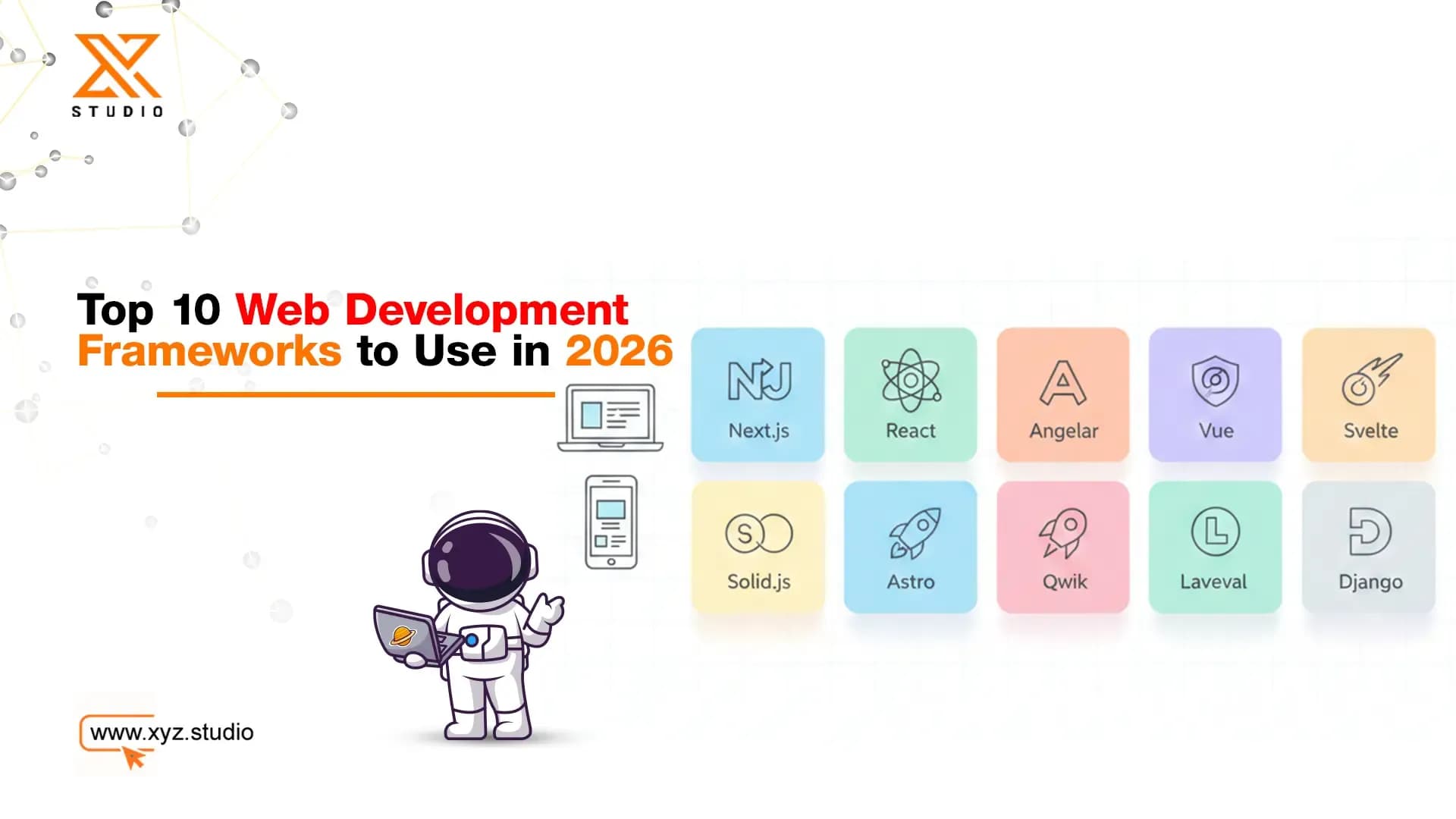
Top Web Frameworks for Watch During 2026
Versatility in delivering content is a needs to for any enterprise. With a standard (or monolithic) CMS, you're normally restricted to particular platforms and channels.
This means that, no matter whether your users are on a desktop, smart device, or IoT device, they'll still get a consistent experience throughout all channels. If you're in the marketplace for a business CMS, opportunities are you're already in the thick of handling big volumes of content and are expecting more of the very same in the future.
Make sure your CMS can level up together with your business. Security is a crucial consideration when looking for a new CMS for your enterprise business. You'll likewise want to ensure your CMS can comply with any specific standards and policies your service requires to conform to.
You'll benefit from a wide range of alternatives to customize your site or digital experience to your specific needs. These can range from easy adjustments to the appearance of your site, to more complicated modifications that change the functionality and habits of material. This one nearly goes without saying, however speaking as someone who works inside a CMS on the daily, it requires to be user-friendly and simple to utilize.
Enterprise CMSs support personalization by leveraging data to deliver targeted material to various audiences. Whether through content suggestions, targeted messaging, or product recommendations, the ability to customize experiences at scale is key to making sure company growth. With advanced customization abilities, industries can enhance every aspect of the client journey, from initial interaction to post-purchase engagement.
Comparing Modular vs Legacy CMS SolutionsScaling Enterprise System Frameworks in 2026
Your enterprise CMS should make it easy for your organization to handle multiple websites and languages within a single platform. Automated workflows streamline content creation, modifying, approvals and publishing.
Lots of different content. That can be a lot to deal with. Your CMS must keep you completely control by permitting you to produce users, groups, and functions, then assign them protect access to different kinds of content. Implementing a new CMS within a large organization features its fair share of challenges, from onboarding and system integrations, to stakeholder positioning.
Make certain you drill down into the overall cost of ownership (TCO), consisting of the preliminary execution, licensing charges, continuous maintenance and assistance, upgrades, and modifications. And when it comes to providing ROI, make certain your chosen CMS has a quick time-to-market. It's important to get buy-in from different departments (marketing, IT, legal) to ensure prevalent adoption and smooth operations.
Selecting a Ideal CMS to Business Growth
As soon as you've done that, ask the following questions about each business CMS you're thinking about: Start with an obvious one: your business objectives, processes and operations. That way, you can really refine in on the particular needs and requirements your new CMS needs to handle. Talk to your digital, marketing and IT teams on our content creation procedure, circulation and workflows.
Enterprise content management systems are constructed to scale flawlessly along with your development, accommodating larger content volumes and more complex projects. While ease of use isn't always the leading priority for enterprise CMS purchasers, it really matters to your group. Lower their learning curve and help them get up to speed faster with a CMS that's simple to utilize.
Examine their client assistance channels, training resources, and offered documentation to ensure they can supply the assistance you need throughout your journey. It's also crucial to evaluate the supplier's roadmap for future developments. Comprehending their commitment to development and remaining ahead of digital patterns can give you some insight into the longevity of their platform.
Try to find external user evaluates, industry expert reports and case studies to determine whether the platform would be a great fit to your enterprise. Humor us for a minute while we wax lyrical about our extremely own CMS. Due to the fact that yep, Optimizely uses a hybrid headless CMS that integrates the finest of both worlds the versatility and omnichannel abilities of headless CMS with the simplicity and ease of use of a conventional CMS.
Whether you require to power an extremely personalized website, provide dynamic content to mobile apps, or create material for IoT gadgets, Optimizely's CMS offers the flexibility to deliver your content anywhere your users are. Plus, unlike purely headless CMS platforms, Optimizely's hybrid offering provides designers the flexibility to develop frontend applications in the framework of their option, while material supervisors and editors can continue to use an intuitive, integrated material production platform.

Latest Posts
Optimizing Sales Pipeline Performance by Smart Logic
Mastering Conversational Search for Better Visibility
Leveraging Workflows to Accelerate B2B Operations